Nigeria is in West Africa, with an area of approximately 923,768 square kilometres (356,669 square miles). Nigeria is bordering several countries including Benin, Chad, Cameroon, and Niger with the Capital City in Abuja and the Largest City, Lagos.
The approximate population of Nigeria is 213 million people, (2020 estimate) living in diverse terrain, characterised by tropical rainforests in the south, savannas in the north, and mountains in the east. The highest point in Nigeria is Chappal Waddi, which stands at 2,419 meters (7,936 feet) above sea level.
Nigeria also has several major rivers, such as the Niger River, Benue River, and Cross River, which is thought to be the reason for the migration of several diverse people to the region. Nigeria’s coastline is approximately 853 kilometres (530 miles) along the Gulf of Guinea and is rich in natural resources.
Nigeria has a tropical climate, with two main seasons: the rainy season (April-October) and the dry season (November-March) which supports diverse agriculture. The country is rich in natural resources, including crude oil, natural gas, coal, iron ore, Niobium, Lithium, Gold and tin.
The above geographic features have a significant impact on Nigeria’s diverse culture, economy, and daily life. Nigeria is a culturally rich and diverse country with over 250 ethnic groups, each with a distinct language, culture, and traditions.
Look at this map:
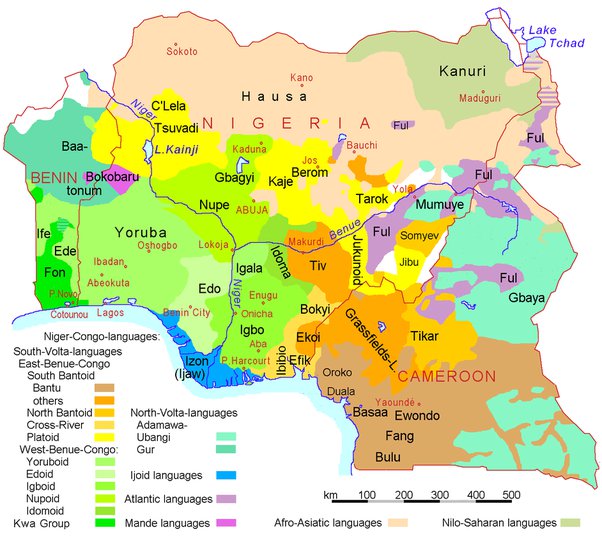
Some of the major tribal groups in Nigeria include; Hausa (29%) predominantly found in the north, Yoruba (21%) mainly in the southwest, Igbo (18%) found in the southeast, Fulani (10%) a nomadic group spread across the country. Others are the Ibibio (4%) in the south, Kanuri (3%) found in the northeast, Edo (2%) mainly in the south, Nupe (2%) found in the central north, Tiv (2%) in the middle belt, and Ijaw (1%) found in the coastal line of Nigeria.
Other notable tribes include the Berom in the Jos plateau, Igala and Idoma, in the middle belt region and Efik, in the south among many others. This diversity has contributed to Nigeria’s rich cultural landscape and heritage.
Nigeria’s tribal diversity has several positive implications such as the cultural wealth associated with over 250 ethnic groups, which boasts a vibrant cultural landscape, showcasing a wide range of languages, customs, and traditions with structured leadership systems that persist.
Tribal diversity fosters strong community bonds, social cohesion, and support networks within and across ethnic groups. Similarly, the diversity of tribes contributes to economic development through entrepreneurship, innovation, and resourcefulness. It encourages competition and creativity in all spheres of life. The federal character principle ensures the representation and inclusion of various ethnic groups in governance and decision-making processes.
Tribal diversity attracts tourists, promoting cultural exchange and enhancing revenue generation. Nigeria’s many languages enrich the country’s linguistic heritage and contribute to global language diversity. Tribal diversity has helped Nigerians adapt to challenges and thrive in a dynamic and harsh environment.
Thus, embracing tribal diversity strengthens Nigerian identity and promotes unity in diversity. Though tribe and tongue may differ in brotherhood Nigerians stand, especially when they meet abroad. The vibrant exchange of Naija salute and discussion has not ceased to amaze the host nations.
Tribal diversity has inspired creativity, driving progress in arts, literature, music, and science. Nigeria’s tribal diversity has served as a model for celebrating and managing diversity worldwide.
By embracing and celebrating its tribal diversity, Nigeria can continue to harness its strengths and promote a more inclusive and vibrant society.











 Goodwill Ofunne